


Precision Stone Removal with URS
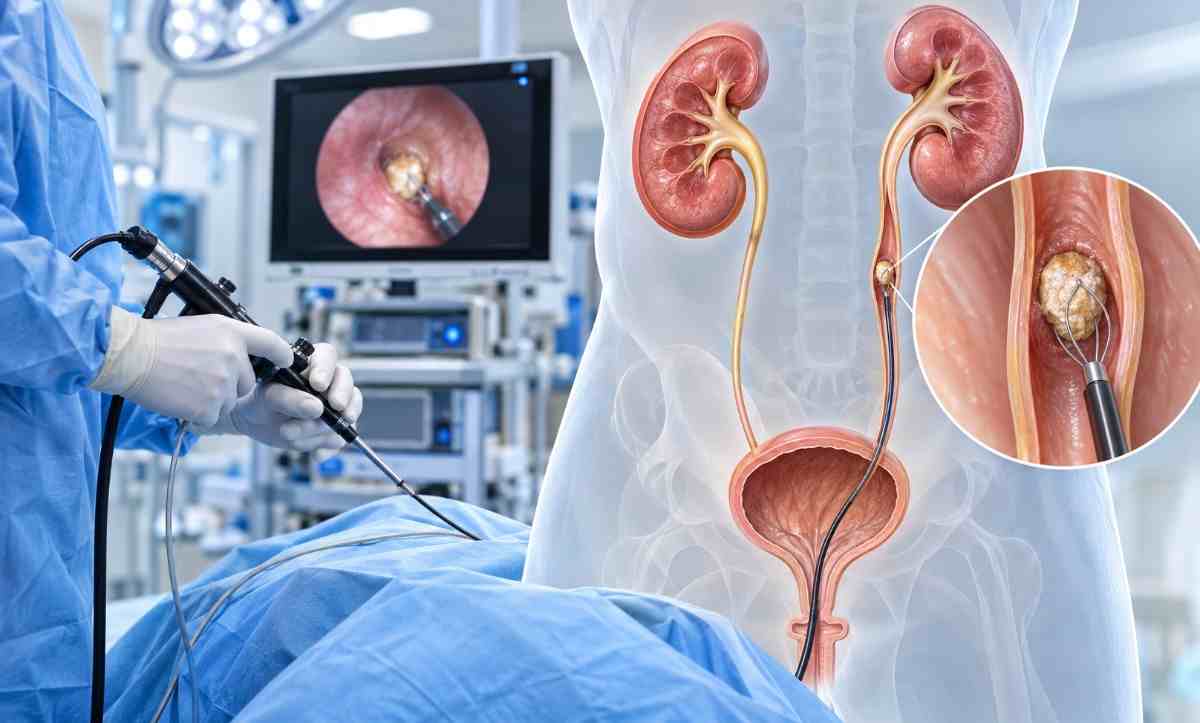
Mahavir Hospital offers state-of-the-art Ureteroscopy (URS) for the diagnosis and treatment of stones located in the ureter. This minimally invasive endoscopic procedure uses a thin, flexible or semi-rigid scope passed through the natural urinary tract, eliminating the need for incisions. The stones are then fragmented using a precision laser and removed safely.
URS is an excellent, highly successful treatment modality for stones that are stuck in the lower or mid-ureter. Our skilled urologists use advanced imaging and laser lithotripsy to ensure maximum stone clearance with minimum discomfort, allowing you to return to normal life swiftly and safely.
Why Choose Mahavir Hospital for URS?
We provide world-class urological care in a compassionate and comfortable environment. Our operating rooms are equipped with the latest endoscopic and laser technologies to guarantee accurate stone targeting and swift recovery, minimizing post-operative complications.
- No external cuts or incisions required
- High success rate in treating lower and mid-ureter stones
- Advanced Holmium laser for efficient stone fragmentation
- Fast discharge and rapid return to daily activities

Frequently asked questions
Ureteroscopy (URS) FAQs
During URS, a thin scope is passed through the urethra and bladder directly into the ureter where the stone is located. Using specialized instruments or a laser through the scope, the surgeon breaks the stone and removes the fragments.
No, Ureteroscopy is typically performed under general or spinal anesthesia to ensure you are comfortable and do not feel any pain during the operation.
A stent is a small, soft tube placed in the ureter to keep it open and allow urine to flow after the procedure. Stents are often placed temporarily to prevent swelling and help minor stone fragments pass easily.
The procedure generally takes between 30 minutes to an hour, depending on the size and location of the stone, as well as the complexity of fragmentation required.